

If you work at Sutra, you are offered the loveliest and arguably the most balanced work mantra; which is to work hard but party harder. So, this time we decided to put together snippets (not the embarrassing ones, obviously!) of an office party at one of the best companies to work for in Mumbai. And trust us, in the video we’ve only showed you half the madness that went down this Navratri. Speaking of which, please pardon some of the nautanki in the video, we’re just a bunch of young, loud and free individuals 🙂
 Sutra’s employees showing off their traditional outfits and pearly whites, ready for a real rager at the awesome office terrace. This is only half of us though, the rest are pulling hookah in the conference room…
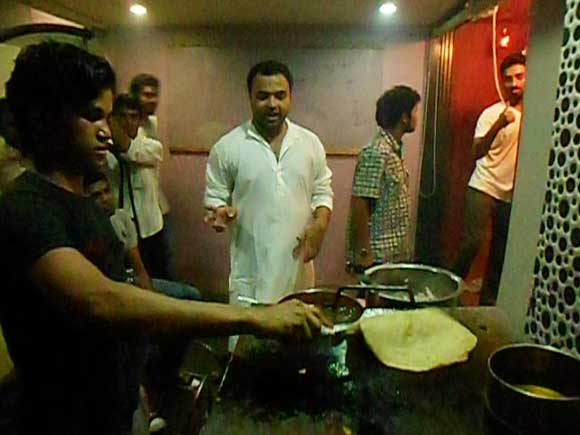 Our founder, Waqar Azmi reciting the ingredients for a customized wrap (frankies) at the office pantry. I mean, what’s a party without delectable munchies. And our parties always have something yummy laid out, whether it’s kebabs or biryani or dosas or pizzas, we know the importance of a satisfied gut!
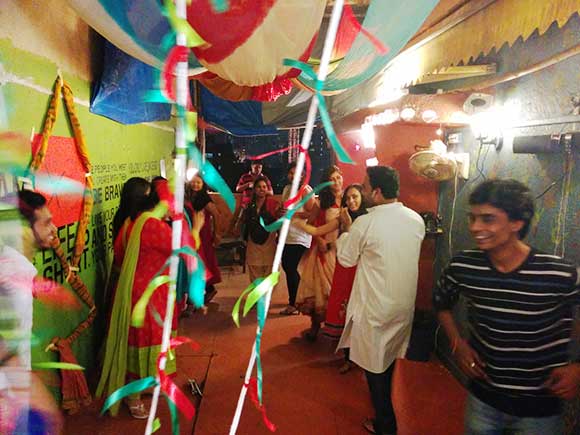 The dhoom dhamaka continues. All smiles, gearing up for a dancing session. After all, what’s a balanced work mantra like ours without some music and masti!
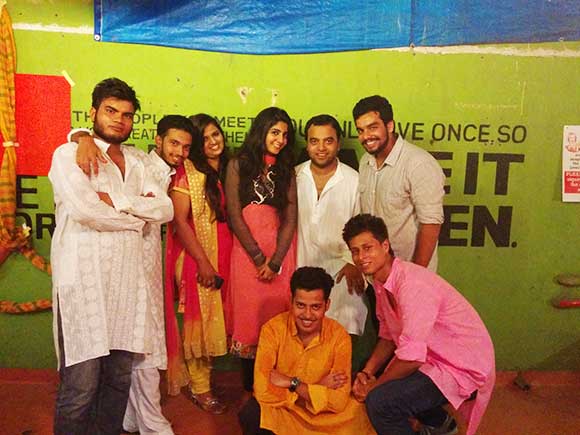 But first, picture time! Decked up and gleeful Sutra employees in a group picture with Waqar.
 Back to the dancing. And as you can see, there’s some fun shaking of tail feathers and swishing of hair here and there.
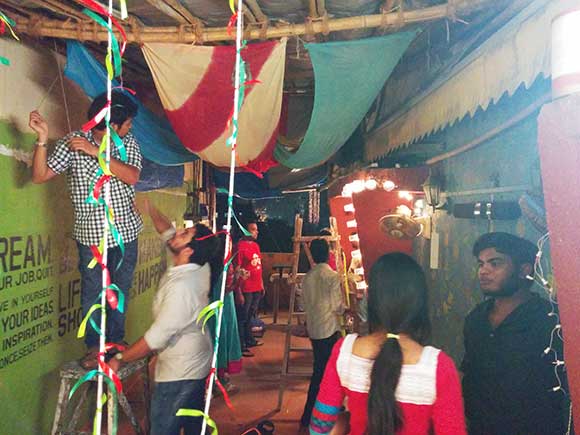 Well, not only do you attend the parties, you may even volunteer to be part of the fun commotion of preparation and setup!
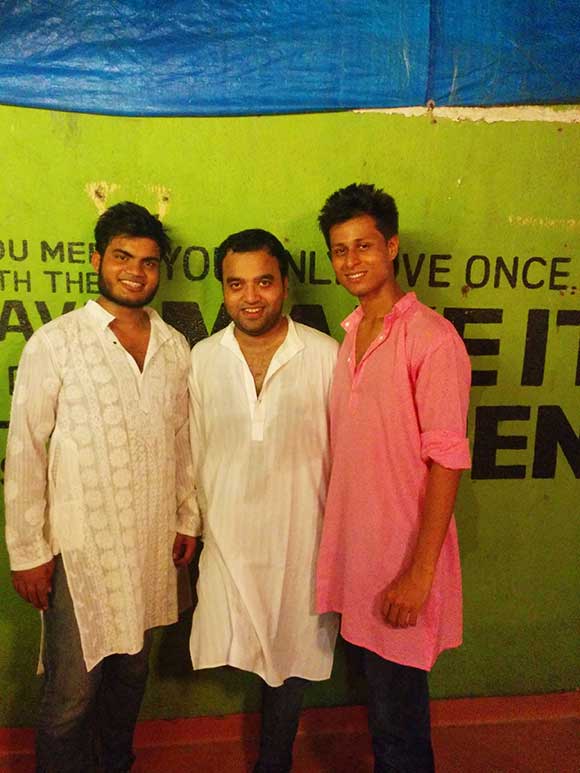 And finally, at Sutra, everyone can freely have inspirational one-on-ones with the founder of one of the best companies to work at in Mumbai.
Think you’ve got what it takes to follow our balanced work mantra to work hard and party harder? Do you see yourself fitting right into this crazy, hard working and happy-go-lucky work culture?
Visit our Careers page for job openings in Mumbai. We are looking for awesome people to join our teams:
1) HR & Recruitment
2) Sales / Business Development
3) Marketing
4) Operations
5) Technology
6) SEO (Search Engine Optimization)
You can also call Namita on +91 922 045 9226 or (022) 4266 9487 or send us your resumes at careers@sutrahr.com NOW!
 We’re currently floating in what is called a startup ecosystem. Everybody has an idea, and surprisingly enough, these ideas aren’t all that bad. In fact, they’re spinning us clever Indians a few million bucks every year. Seriously! Check out
  1) Abhishek Rungta
 2) Ajeet Khurana
 3) Alok Mittal
 4) Anand Ladsariya
 5) Anand Rajaraman
 6) Anuj Pulstya
 7) Ashish Gupta
 8) Bala Parthasarathy
 9) Deepak Shahdadpuri
 10) Dhiraj Rajaram
 11) Freeman Murray
 12) Ganesh Krishnan
 14) Kanwal Rekhi
 15) Karthik Reddy
 16) Kunal Bahl
 17) Maneesh Bhandari
 18) Mukesh Bansal
 19) Mukund Mohan
 20) Naveen Tewari
 21) Pallav Nadhani
 22) Pankaj Jain
 23) Rahul Khanna
 24) Rajan Anandan
 25) Rajesh Sawhney
 26) Ram Shriram
 27) Ravi Gururaj
 28) Rehan Yar Khan
 29) Sachin Bansal & Binny Bansal
 30) Sandeep Singhal
 32) Sasha Mirchandani
 33) Sashi Reddi
 34) Sharad Sharma
 35) Shekhar Kirani
 36) Srini Koppolu
 37) Sunil Kalra
 38) Suvir Sujan
 39) Venky Harinarayan
 40) Vijay Shekhar Sharma
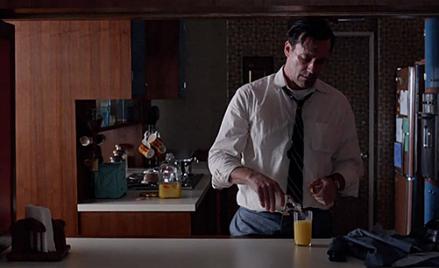
 Walking into office, you didn’t get the time for breakfast so you’ve carried your oats and milk. Nothing like a healthy start to your day to get those creative juices flowing.















 Yep, it’s 9 months later and I still suffer withdrawal symptoms from arguably one of the best TV shows ever made, “Breaking Bad”. The Emmy award winning storyline follows the life of an overqualified high school chemistry teacher with inoperable lung cancer and consequently two years to live who then turns into a masterly drug lord, manufacturing and selling the world’s purest Crystal Meth. All of this just to provide for his family.















 Singapore has been titled the friendliest country to conduct business in for six consecutive years. Yet, startups and medium size businesses budding in the country have often thirsted for funding and developing venture capital within the country has been no mean feat. This has even compelled Singaporean entrepreneurs to set base outside the nation’s boundaries. Recently though, the scene has reversed. With the government initiating programs like the “Technology Incubation Scheme” in 2010, Singapore is all geared up to be the world’s next Silicon Valley.
 The Singaporean economy is rapidly growing. This growth spurt has been reflected in its various industries. Singapore is a financial hub for the rest of the world and has emerged as a global cradle for startups and small-scale industries. In an effort to celebrate the country’s dynamic spirit, we present to you a list of 15 digital agencies that have been initiated in Singapore and have contributed to the country’s excellence.
1. Arcade
Founded: 2010
Key People: Nick Marret (CEO)
This creative 4 year old has been creating quite some noise with its work. Its collaborative business model enables the formation and dilution of teams in accordance to the job at hand. The agency has its footprints stamped over Singapore, Indonesia, and Japan. Its client list flashes high profile names like Google, MTV, Clear, Closeup, Cornetto, and Ben & Jerry. CEO Nick Marret and Group CEDs—Matt Cullen, Mark Taylor, and Gary Tranter—must really be proud!
The Singaporean economy is rapidly growing. This growth spurt has been reflected in its various industries. Singapore is a financial hub for the rest of the world and has emerged as a global cradle for startups and small-scale industries. In an effort to celebrate the country’s dynamic spirit, we present to you a list of 15 digital agencies that have been initiated in Singapore and have contributed to the country’s excellence.
1. Arcade
Founded: 2010
Key People: Nick Marret (CEO)
This creative 4 year old has been creating quite some noise with its work. Its collaborative business model enables the formation and dilution of teams in accordance to the job at hand. The agency has its footprints stamped over Singapore, Indonesia, and Japan. Its client list flashes high profile names like Google, MTV, Clear, Closeup, Cornetto, and Ben & Jerry. CEO Nick Marret and Group CEDs—Matt Cullen, Mark Taylor, and Gary Tranter—must really be proud! The Middle East has been a centre of world affairs all through its history. Major brands and MNCs look to avail from its rich markets and turn to retailers (master franchises) for assistance. These retailers (or retail groups) from the Middle East do more than merely assist. They establish and flourish the brand while paying attention to the smaller details.
 Singapore is the second freest economy in the world. The Lion City’s competitive, innovative, and business-friendly culture has made it the center of all entrepreneurial activity in Southeast Asia. Small wonder numerous startups roar within its boundaries each year! We added our bit to the startup ecosystem through the
  “I am sorry, but I can’t join this firm. My wife isn’t comfortable with relocating”. Does that line strike a chord with you? Fallouts for jobs that require relocation have proven to be a constant headache, whether it is an HR firm or a startup.